

BIC lighters have been produced over 50 billion times since their 1973 debut. Here’s how these precisely engineered fire starters are manufactured with remarkable consistency and safety.
1. Raw Materials
BIC uses just 7 components per lighter:
- Plastic resin (for the body)
- Metal (flint wheel, spring)
- Butane fuel
- Child-safety mechanisms
- Printed decorations

2. Step-by-Step Production
A. Injection Molding (Body Creation)
- Plastic pellets are melted at 400°F (204°C)
- Injected into molds at 2,000 psi pressure
- Cools in 15 seconds to form the iconic lighter shape
- Each mold produces 4 lighters simultaneously
B. Metal Components Assembly
- Flint wheel and spring inserted automatically
- Precision calibration ensures 3,000+ reliable strikes
C. Butane Filling
- Fuel injected through the base at -40°F (-40°C)
- Each lighter contains 4.5g of butane (exact measured dose)
- Vacuum-sealed to prevent leaks
D. Quality Control
- 100% of lighters are flame-tested
- Must meet strict ISO 9994 safety standards
- Rejects are melted down for recycling
E. Packaging
- Lighters sorted into retail packs or bulk trays
- Includes multilingual safety warnings
3. Safety Innovations
Key features that make BIC lighters so dependable:
- Ventilated cap (prevents explosion if heated)
- Child-resistant versions (require 5+ lbs of pressure)
- Flame height regulator (consistent 1-inch flame)
4. Manufacturing Scale
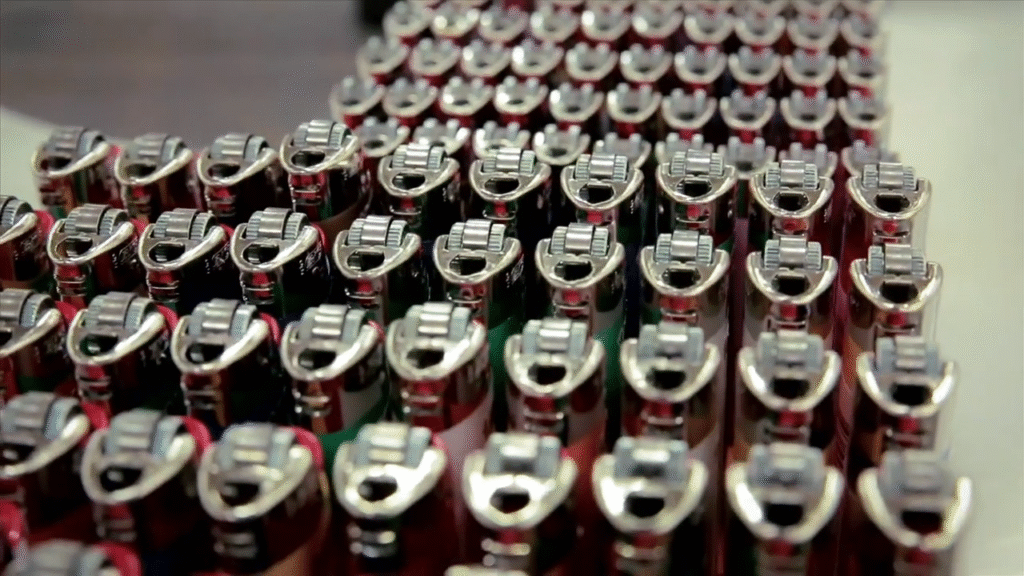
- 12 production facilities worldwide
- France, USA, Mexico, Brazil, China main locations
- 300,000+ lighters produced hourly at peak capacity
- 1 second = 12 lighters made
5. Environmental Considerations
- 97% recyclable materials
- Factories use solar power where possible
- Zero-waste targets at several plants
Why BIC Lighters Dominate
- Precision engineering ensures reliability
- Mass production keeps costs under $0.50 per unit
- Global safety standards compliance
Fun Fact: The total fuel in annual BIC lighter production could power a car to drive to the Moon and back 5 times!
Would you like to see how this compares to Zippo or Clipper production? Let us know in the comments!